Sufferin’ Succotash! The Golden Era of Sylvester the Cat

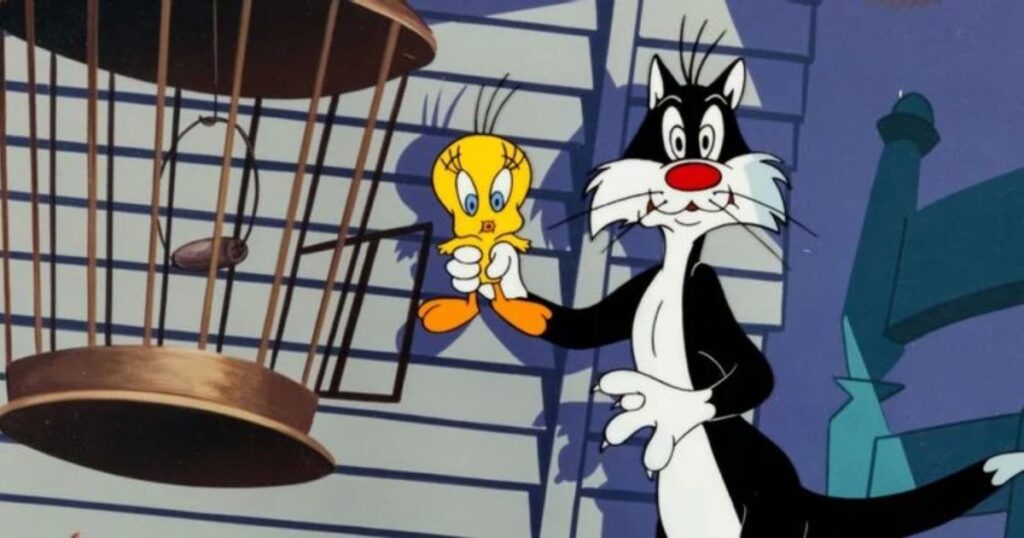
Long before CGI animals and animated universes filled our screens, a lisping black-and-white cat with a never-ending appetite for a tiny yellow bird became one of the most beloved characters in American animation. Sylvester the Cat, a staple of Warner Bros.’ Looney Tunes and Merrie Melodies cartoons, reigned during the golden age of animation—roughly the 1940s to the 1960s. This clever feline may have spent most of his time chasing Tweety Bird, but behind those comedic chases was a rich history filled with animation brilliance, character evolution, and a few surprising facts.
The Birth of Sylvester
Sylvester the Cat made his official debut in 1945’s Life with Feathers, a cartoon directed by Friz Freleng. The character’s original look was much like we know him today—black fur, a big red nose, and an ever-present overbite. But Sylvester wasn’t quite the Tweety-chasing menace we’d come to love. In fact, his first cartoon didn’t even feature the canary at all!
Freleng, one of Warner Bros.’ most prolific directors, shaped Sylvester into the scheming (yet usually unlucky) cat we recognize. Paired with Tweety in 1947’s Tweetie Pie, the duo became an instant hit. That cartoon even won an Academy Award for Best Animated Short, marking a major milestone not just for Sylvester, but for Warner Bros. Animation.
The Genius Behind the Voice
Sylvester’s signature lisp—marked by his famous exclamation “Sufferin’ succotash!”—was brought to life by none other than the legendary Mel Blanc. Known as “The Man of a Thousand Voices,” Blanc also voiced Bugs Bunny, Daffy Duck, and Porky Pig, but he always said that Sylvester was one of the hardest voices to do due to the amount of spitting the lisp required.
To get the sound right, Blanc would place a small piece of tissue under his tongue while speaking. The result was a lisp that became as iconic as the character himself. In many ways, Mel Blanc was Sylvester, and his performance gave the character both comedic charm and relentless personality.
A Cat of Many Roles
While Sylvester is best known for his endless feud with Tweety Bird, he was also featured in numerous cartoons alongside other characters like Porky Pig, Hippety Hopper (a baby kangaroo Sylvester mistakes for a giant mouse), and even his own son, Sylvester Jr. These pairings gave Sylvester depth—at times he was a schemer, other times a doting (and often embarrassed) father.
In fact, Sylvester Jr. added an emotional layer rarely seen in slapstick cartoons. The dynamic between the two made for some of the funniest—and most heartfelt—moments in Looney Tunes history, especially when the elder Sylvester tried to prove his worth in the face of constant failure.
Behind the Scenes Trivia
- Sylvester was almost silent: In early concepts, he was designed to be a silent cat in the Tom & Jerry mold. But giving him a voice allowed for more personality, especially under Mel Blanc’s vocal mastery.
- He’s an award winner: Sylvester appeared in three Academy Award-winning cartoons: Tweetie Pie (1947), Birds Anonymous (1957), and Speedy Gonzales (1955).
- His name is scientific: “Sylvester” is derived from Felis silvestris, the scientific name for the wildcat species—cleverly linking his name to his animal heritage.
- Friz Freleng’s Favorite: Of all the characters he created, director Friz Freleng reportedly held Sylvester in particularly high regard due to the flexibility of his role—he could be villain, victim, or even sympathetic hero.
Legacy of a Lisping Legend
Sylvester the Cat is more than just a Looney Tunes staple—he’s a symbol of animation’s golden era. His antics have influenced generations of animators, comedians, and storytellers. Whether he’s chasing Tweety through a birdcage or groaning over his son’s disappointment, Sylvester remains timeless.
With a mix of clever writing, impeccable animation, and Mel Blanc’s unforgettable voice work, Sylvester secured his place in cartoon history—and in the hearts of fans worldwide. So the next time you hear “Sufferin’ succotash!” echo from your screen, tip your hat to the cat who turned failure into pure comedic gold.